Every developer asks this question, and almost every agency answers with a call booking link. Here are the actual numbers, from someone who builds these sites.
The short answer: a working project website costs anywhere from $200 to $25,000. The long answer is about which of those numbers is right for your project, and that depends on five things you can check in a minute.
The three price tiers
Template or builder, $200–1,000. Tilda, Webflow, WordPress themes. You get a presentable page in a week. What you give up: unit selection, speed on mobile, real search visibility, and any layout that was not in the template. For a garage building or a teaser before launch, this is honestly enough.
Semi-custom, $1,000–5,000. A designed landing page: your renders, your structure, sometimes a simple list of available units. Most project sites in Georgia and the wider region live here. This is where our entry offer sits too: a project landing page from $3,500, designed around the object rather than a template.
Full custom, $5,000–25,000+. A sales website: apartment selector with an availability chart, floor plan pages, an investor block, several languages, CRM integration, analytics. Our range for this tier is $5,000–12,000. Quotes above $15,000 usually include either a large commercial portfolio, a booking system, or an agency brand from a more expensive market.
The five things that move the price
- Unit selection. The chart, filters, unit pages and live statuses are roughly a third of a custom budget. A good selector is also the part that sells, so this is the last place to save.
- Languages. Each language is not a translation bill, it is a second set of pages to design, fill and maintain. Two languages are standard for Georgia; four (EN, RU, GE, HE or AR) is a different scope.
- Content readiness. If renders, texts and plans exist, the site moves fast. If the agency has to retouch draft renders and write the copy, that work is real and appears in the quote.
- Integrations. CRM, reservation flow, price feeds from your inventory system. Each is days of work, not hours.
- Who supports it after launch. A site with nobody to update it is stale in three months. Budget the retainer from the start.
The costs nobody puts in the quote
Domain and hosting are trivial. What actually surprises developers:
- Photography and renders. The site is as good as its visuals.
- Translations by a human. Machine-translated Hebrew on a premium residence page costs more in trust than it saves in money.
- Content updates. New phase, new prices, sold-out stock. If every change goes through a contractor with a week of waiting, buyers see a dead site.
How not to overpay
Phase it. Launch a landing page when sales open on paper. Add the selector when there is stock to select. Add languages when foreign buyers actually arrive in your enquiries. Paying for everything upfront means paying for guesses.
And compare scopes, not totals. Two quotes of $6,000 and $9,000 can describe different projects: one includes content, CRM and a month of support, the other does not. The cheaper one is often the expensive one.
Where we stand
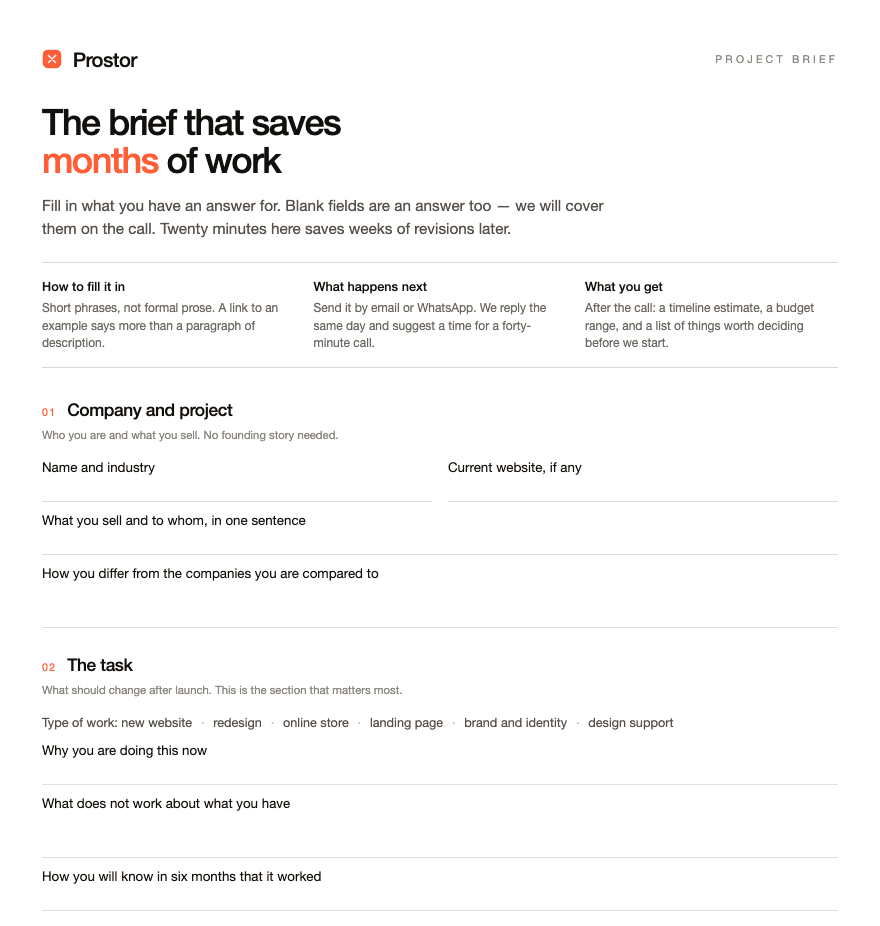
We build sales websites for residential projects in Georgia, the UAE and Israel: landing pages from $3,500, full sites with unit selection $5,000–12,000, support from $1,500 a month. If you want to know which tier your project actually needs, send us the brief or start with our real estate service page. The honest answer is sometimes the cheaper tier.